Blog
Honeymoon in Lofoten: Three Weeks, Two Spaniels and One Old Defender
Three weeks in Lofoten on our honeymoon with two spaniels and a 23-year-old Defender: sunsets, northern lights, freezing swims and the long road home.
Some couples honeymoon on a sun lounger. We took the dogs, a roof tent and a 23-year-old Land Rover up past the Arctic Circle, and I'd do it again tomorrow.
The plan (such as it was)
In summer 2024, Sioned and I pointed Nevis north. Nevis is my Land Rover Defender. She's 23 years old, she's the dream machine, and she has absolutely no frills. Oscar and Heti, our two spaniels, rode in the back like they owned the place, which to be fair they pretty much do.
The whole trip came to about 4,500 miles through 9 countries, with 7 ferry crossings, 8 mountain summits and a moment I'll always remember: crossing into the Arctic Circle. By Sioned's count it also took somewhere between 15 and 20 packets of super noodles. The heart of it was about three weeks on the Lofoten Islands. And Nevis got us all the way up and all the way back without a single hiccup.
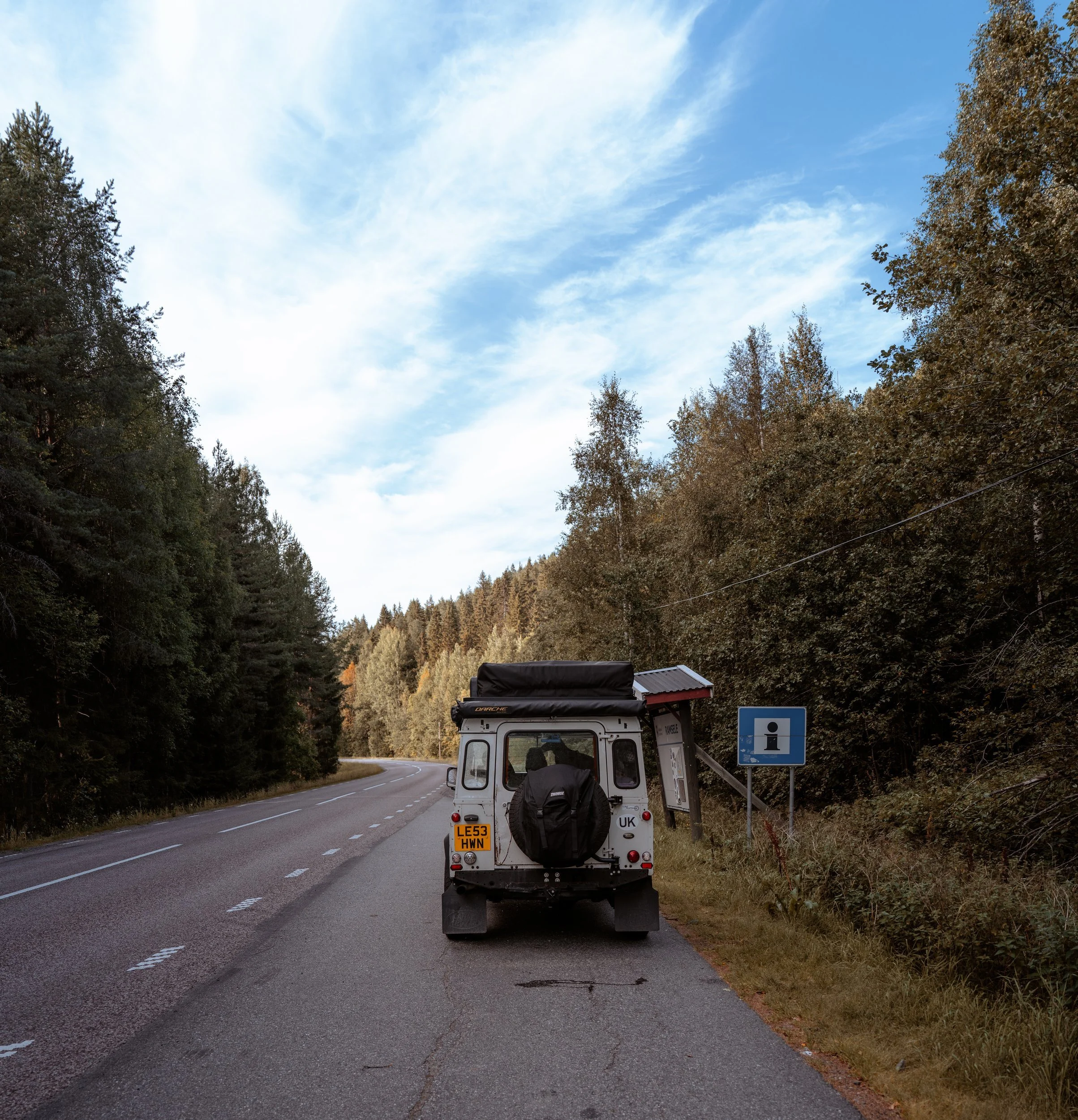
Nevis on the long road north through the pine forest
Rain first, then the sky caught fire
I won't pretend Lofoten welcomed us with blue skies. For the first part of the honeymoon it was mostly rain and cloud. Lovely for moody black-and-whites. Less lovely for drying socks.
Then came an evening at Trevarefabrikken on Heimøya. It's a cultural centre where you can hang out, stay and eat, and the building backs right onto the sea. We had brilliant pizza and a glass of wine, and just as we finished the sky exploded into colour. It felt like the start of a proper run of weather, and that's exactly what it was: a couple of magical weeks we were very lucky to get. It's one of those evenings that sticks with you.
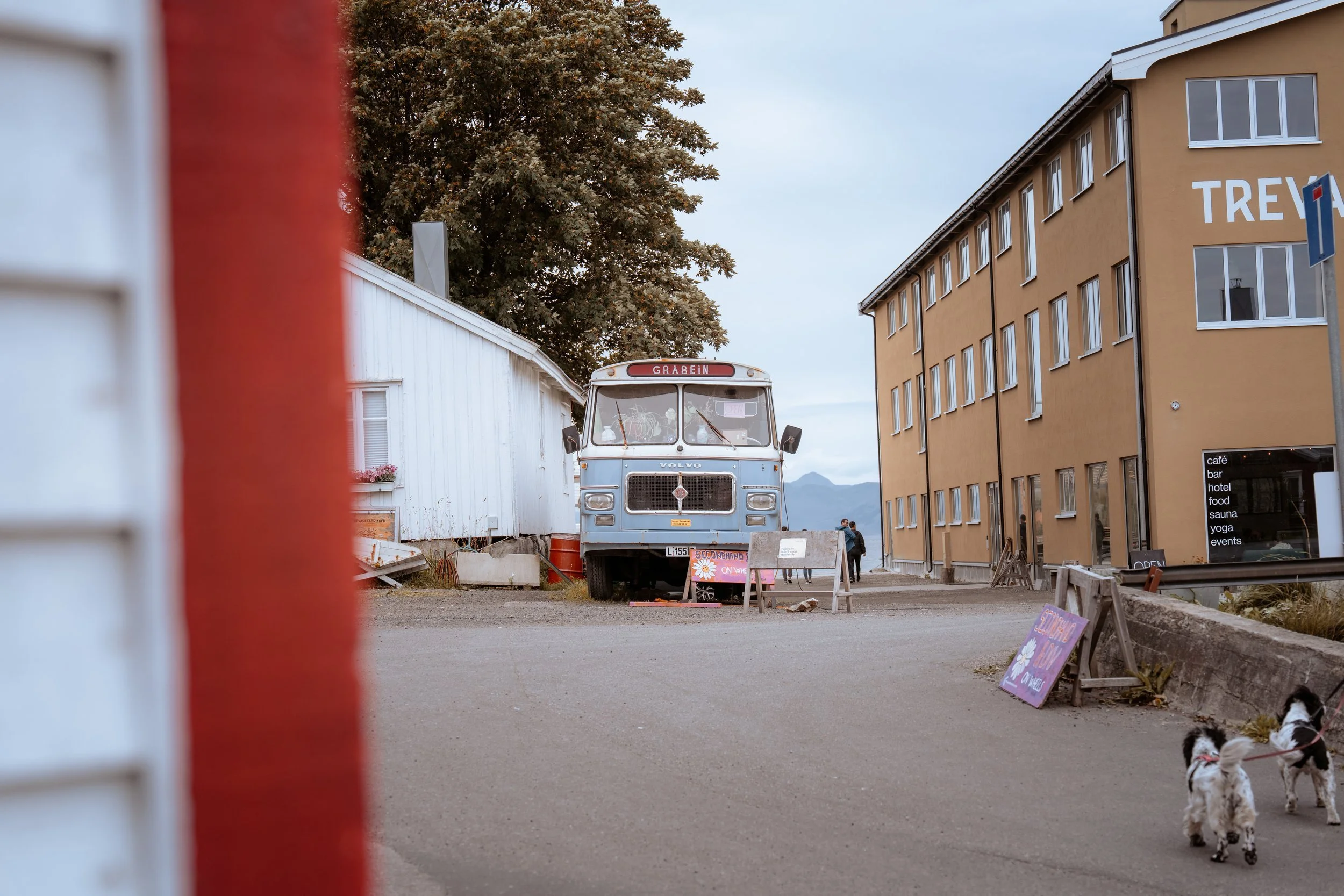
Oscar and Heti outside Trevarefabrikken
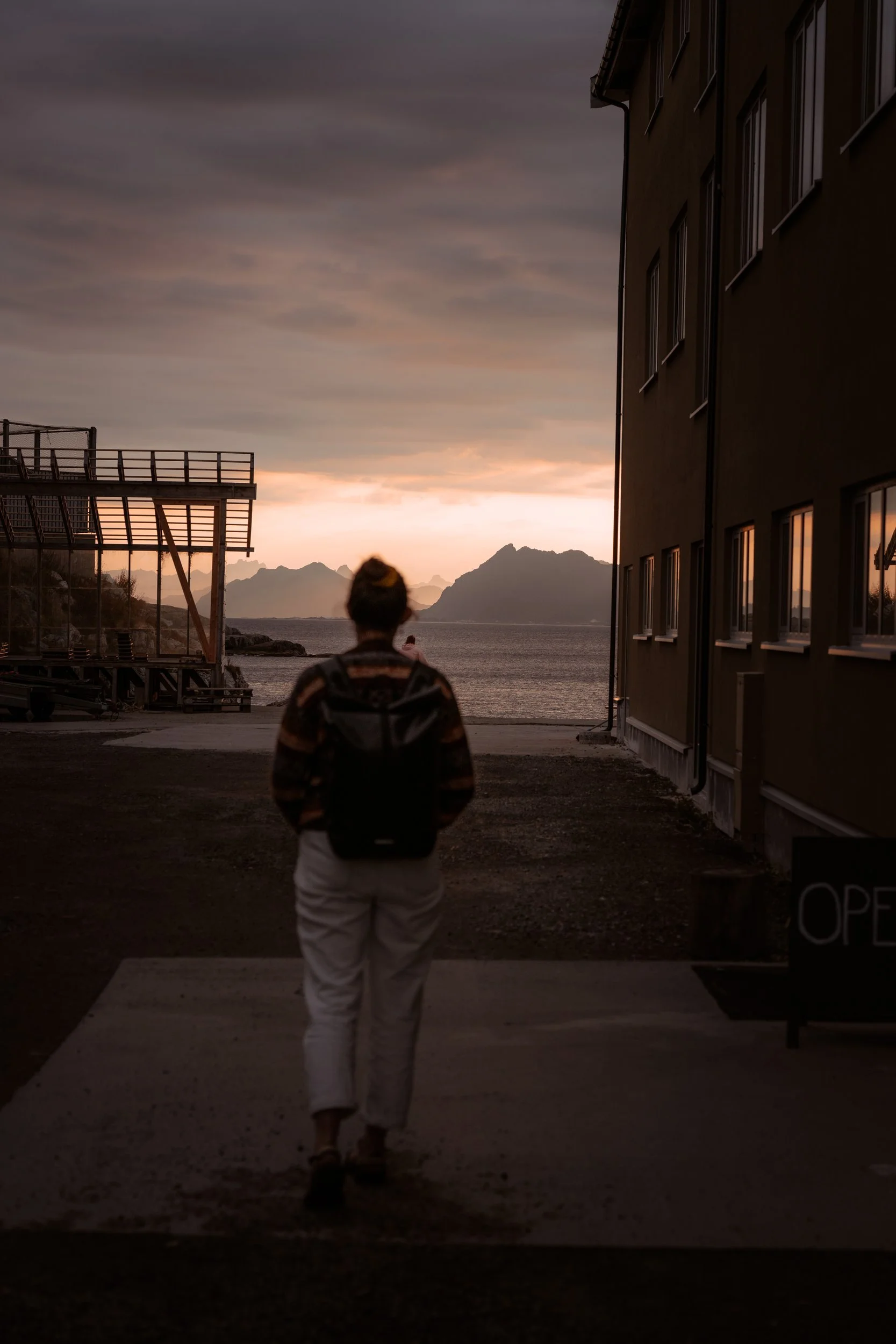
Walking out towards the sunset at Trevarefabrikken
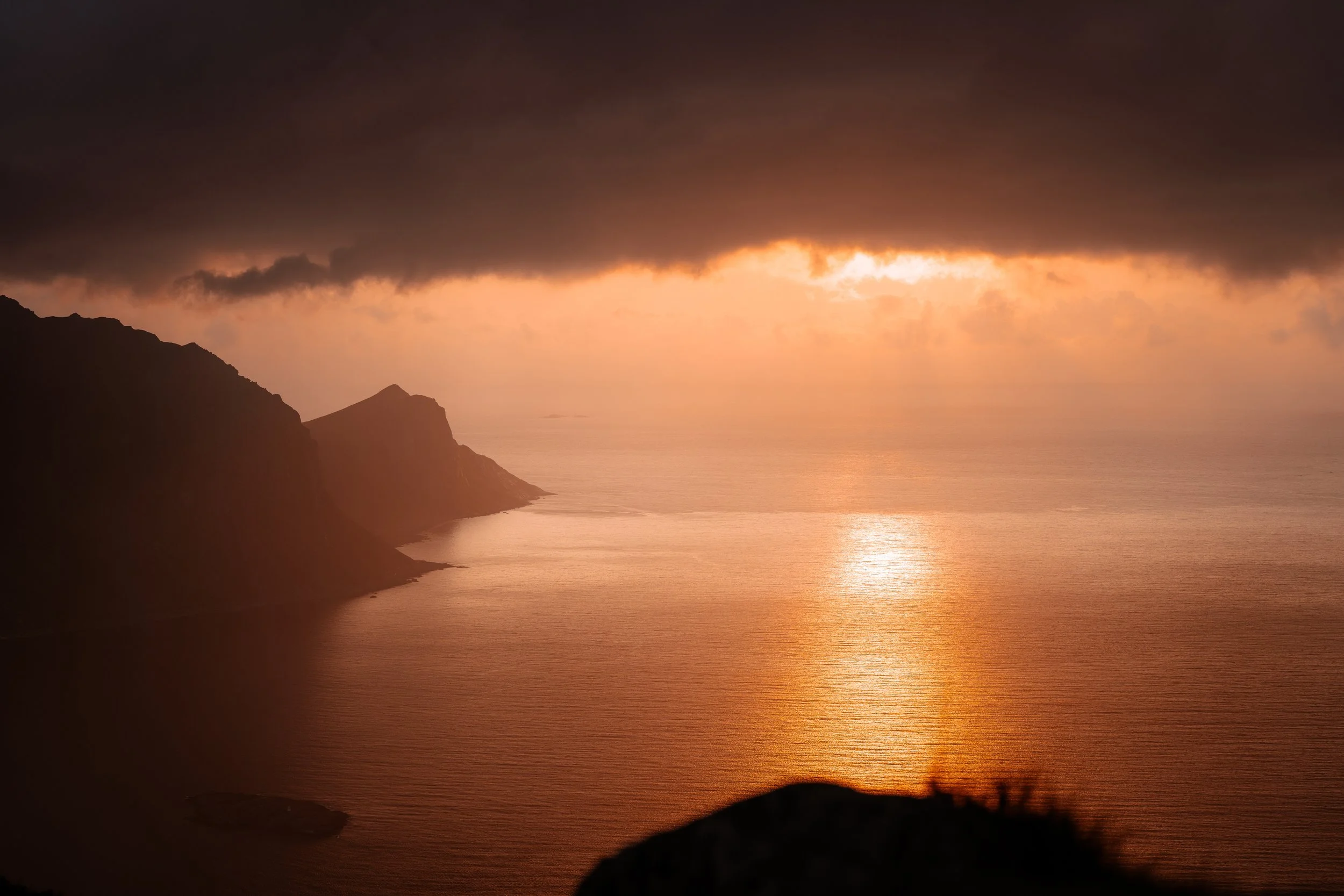
The sky exploding into colour over the sea
A note on light: when the weather breaks after days of grey, keep shooting until well after the sun has gone. The colour often builds in the sky for a while after sunset, and wet rock and calm water will throw it straight back at you. Put something solid in the frame (a building edge, a figure, a headland) so the colour has something to sit against.
Hiking in for the northern lights
The night that sums up the whole trip started with a long walk. We hiked in for hours over rough ground, carrying all our gear, with two spaniels in tow, through mist the whole way and hoping for a clear night. Eventually we reached one of the most spectacular beaches in Lofoten and pitched camp.
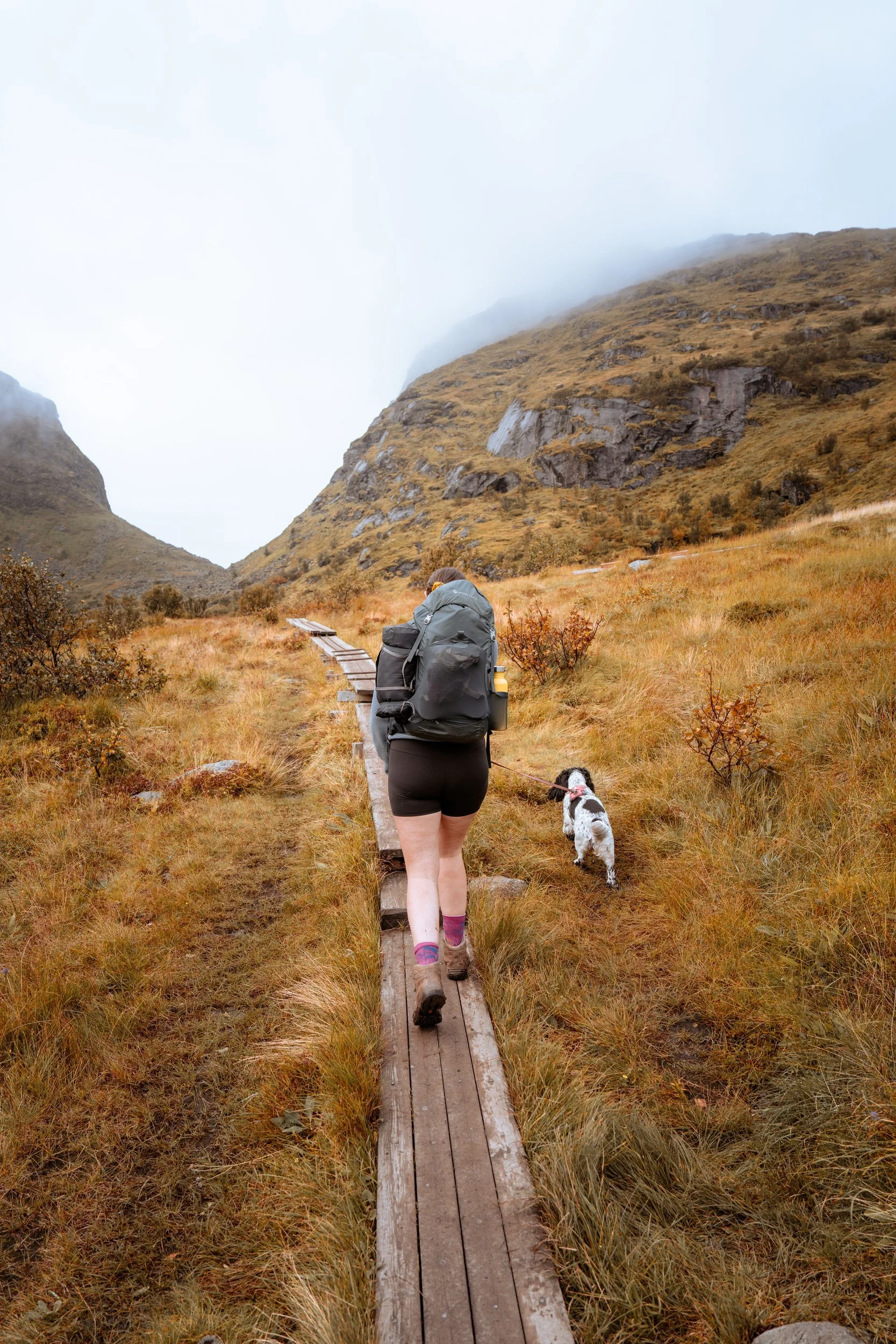
Hiking in with full packs and the dogs
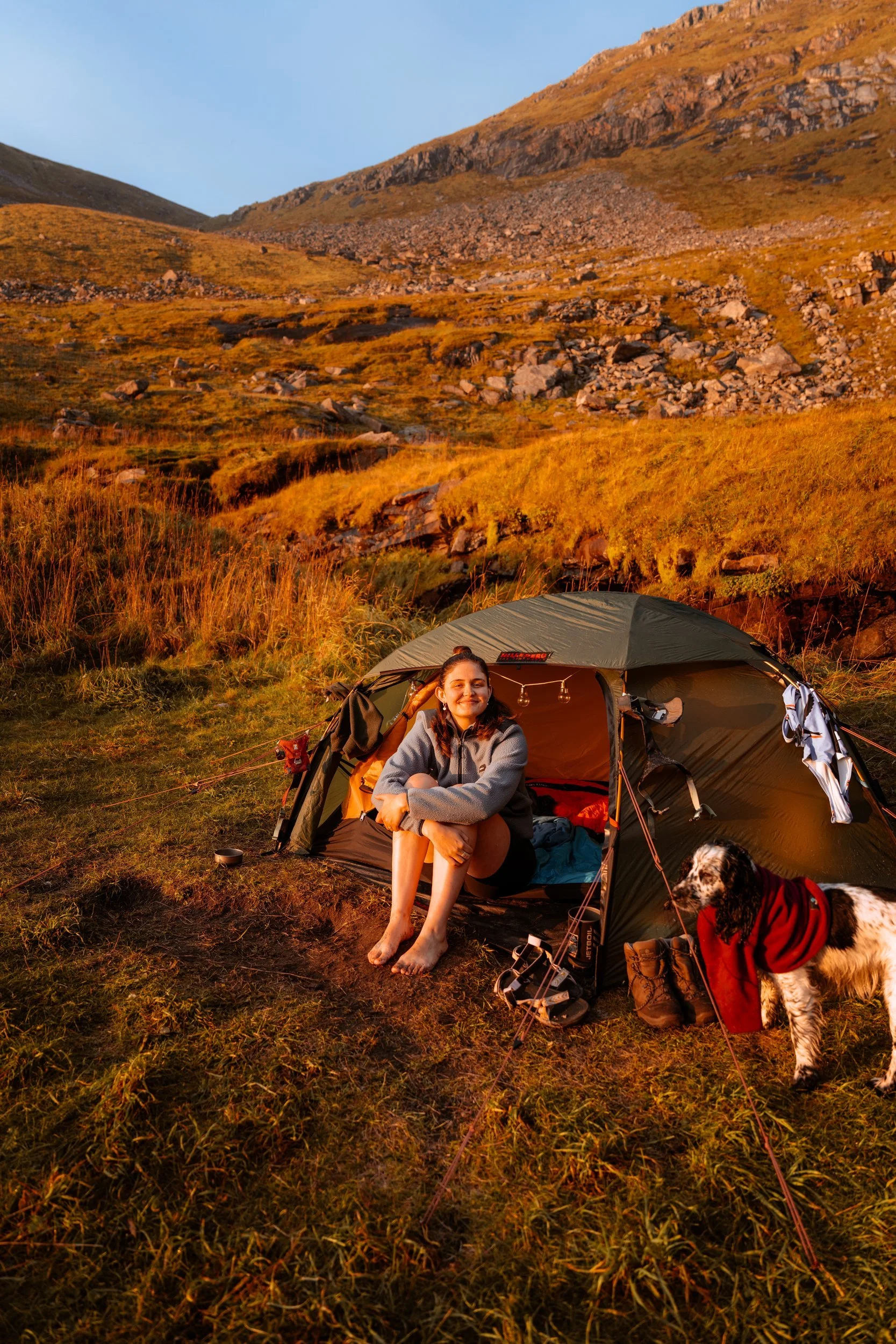
Camp pitched, golden evening light
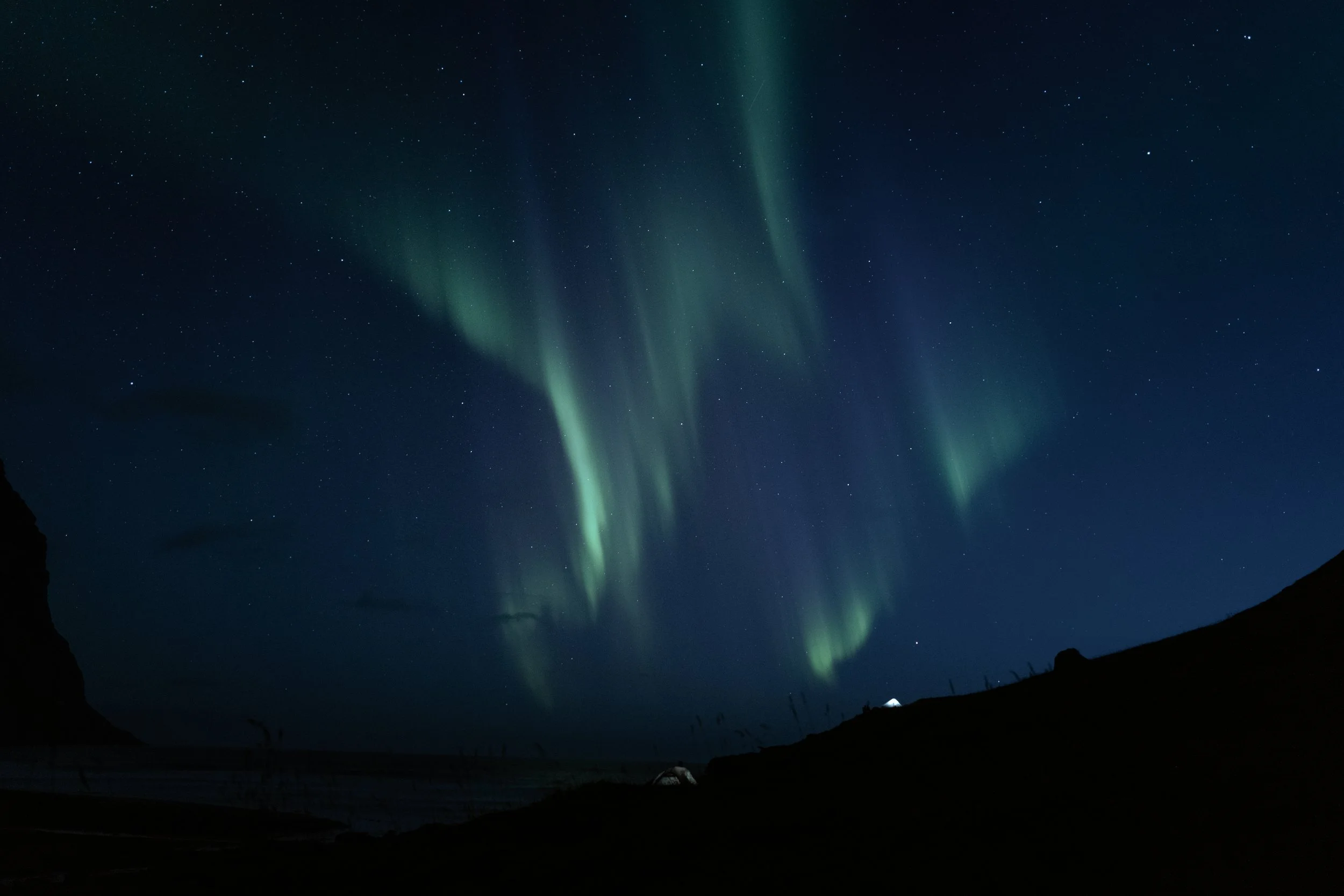
Then, like someone had flicked a switch, the sky erupted. Greens, purples and ribbons of light danced above us, and everything went quiet in that way only nature manages. After all the chasing, waiting and hoping, the northern lights found us. The best rewards really do tend to come after the hardest journeys.
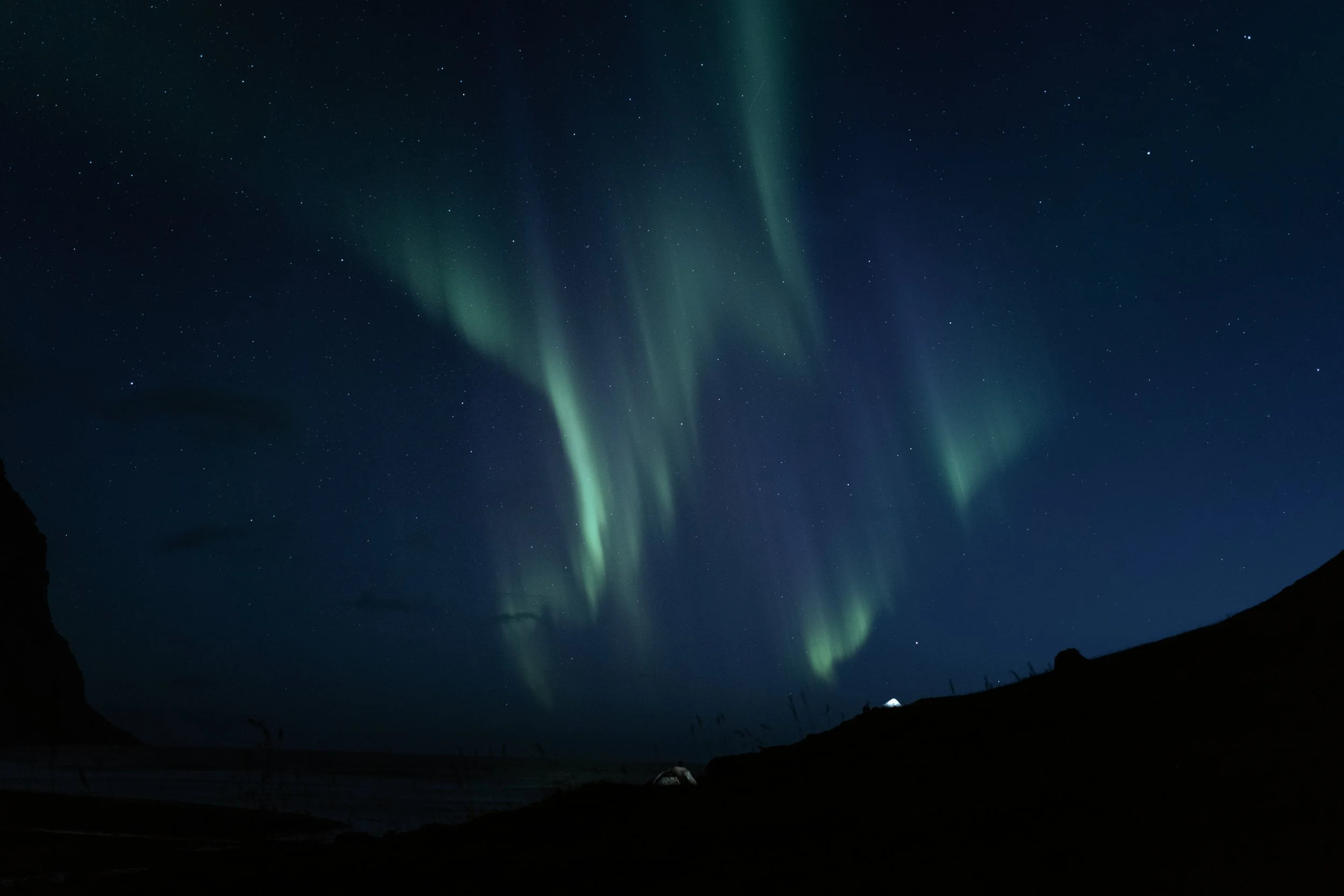
Aurora ribbons over the mountains above the beach camp
Aurora tip: get your composition sorted while there's still some light. Fumbling for a horizon in the pitch dark with cold hands (and a spaniel sitting on your tripod leg) is no fun. A tripod, a wide lens and manual focus set before it gets dark will save you a lot of swearing.
On top of the islands
Lofoten from the tops is something else: wild peaks and views that go on forever, with layer after layer of blue ridges dropping into the sea. Camping up high with those views was, in Sioned's words, her "fave camp out ever". I'm not arguing.
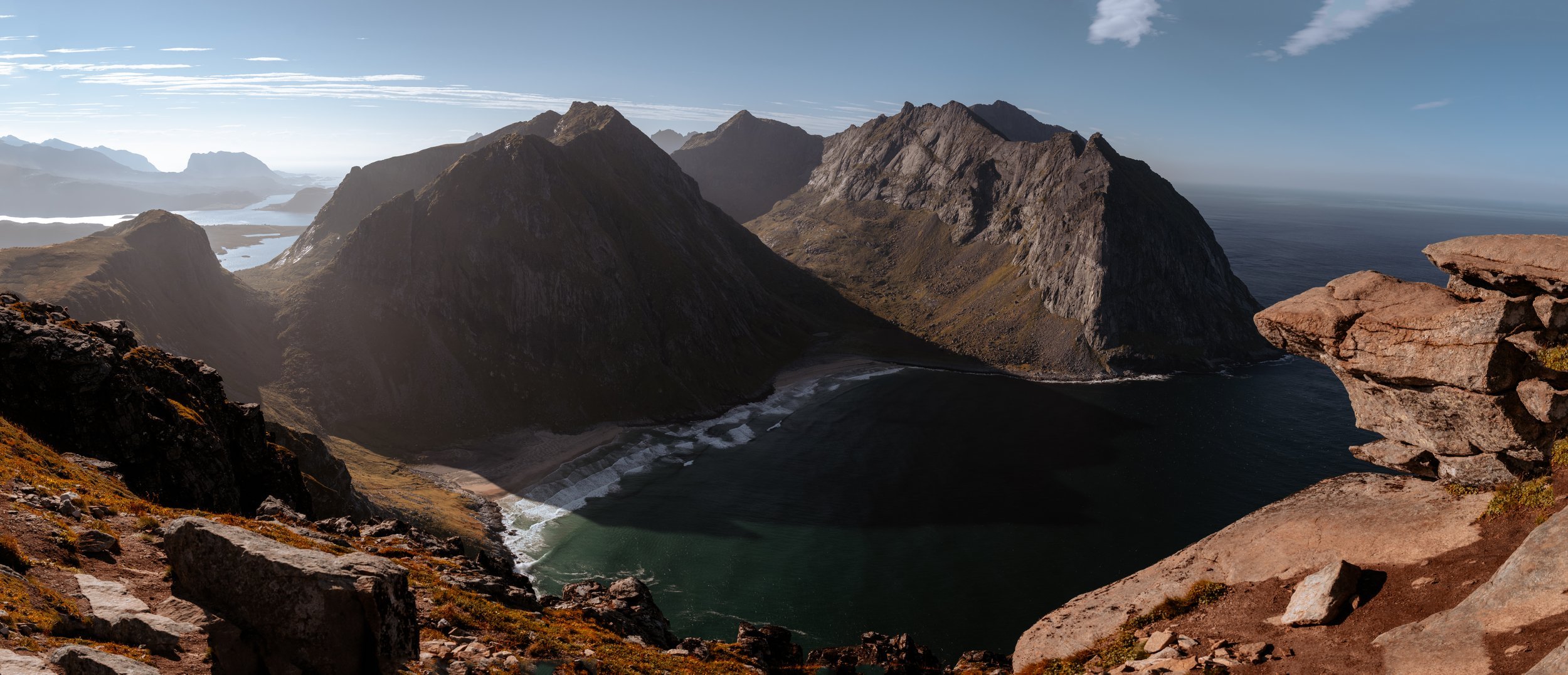
Panorama from the ridge, looking down over the bay and peaks
Freezing swims, beaches and red cabins
Our days soon fell into a rhythm of windswept hikes, beach campouts, local food and late-night fires. There were several saunas too, and we ate our body weight in pastries. And there were swims. "Freezing" doesn't really cover a dip in a Norwegian fjord, but the grin afterwards says it was worth it.
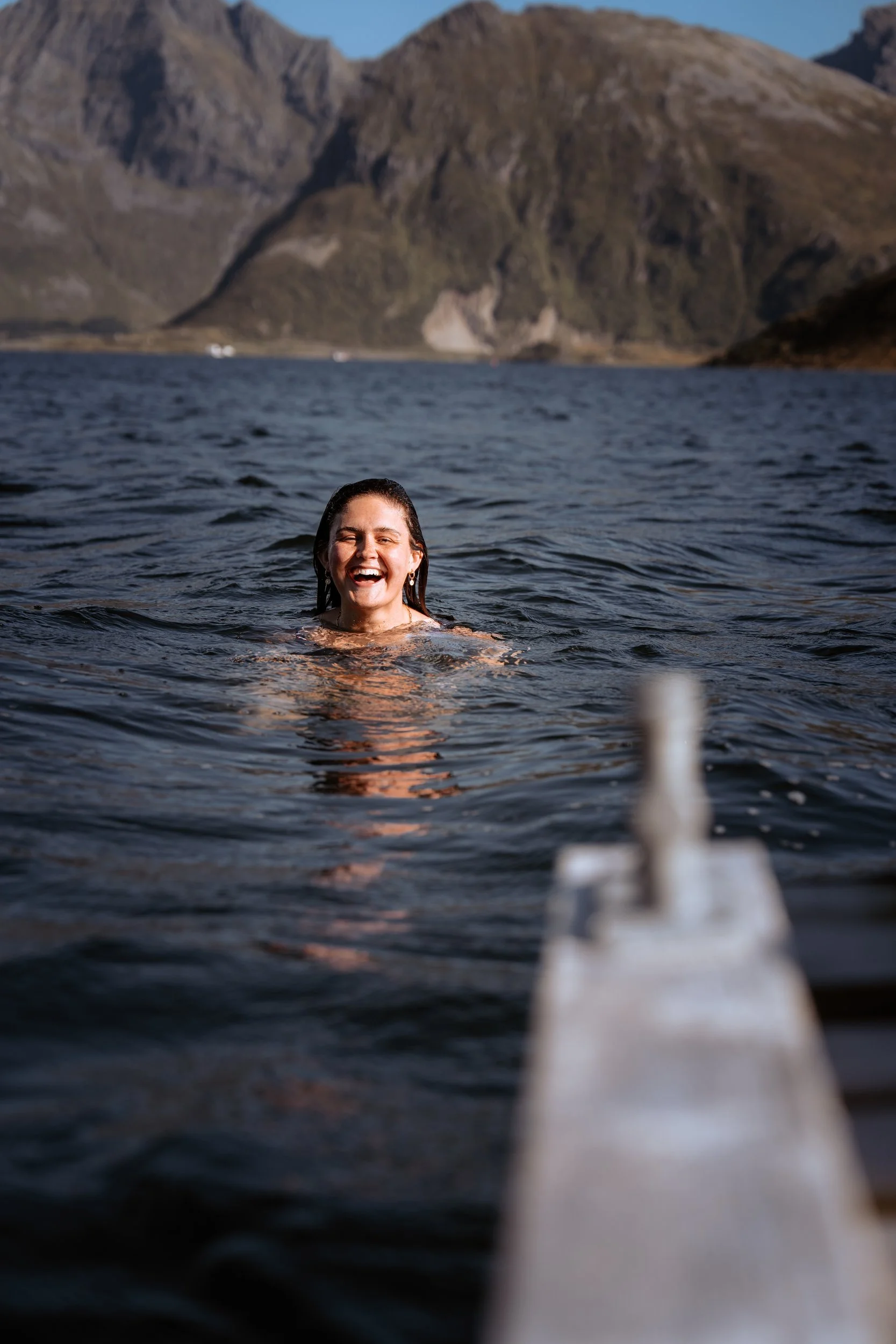
Sioned braving a freezing fjord swim
In between there were those classic red rorbu cabins, sitting on stilts over the water. They're photographed to death, and you can see why. Against grey rock and dark water that red does all the work for you.
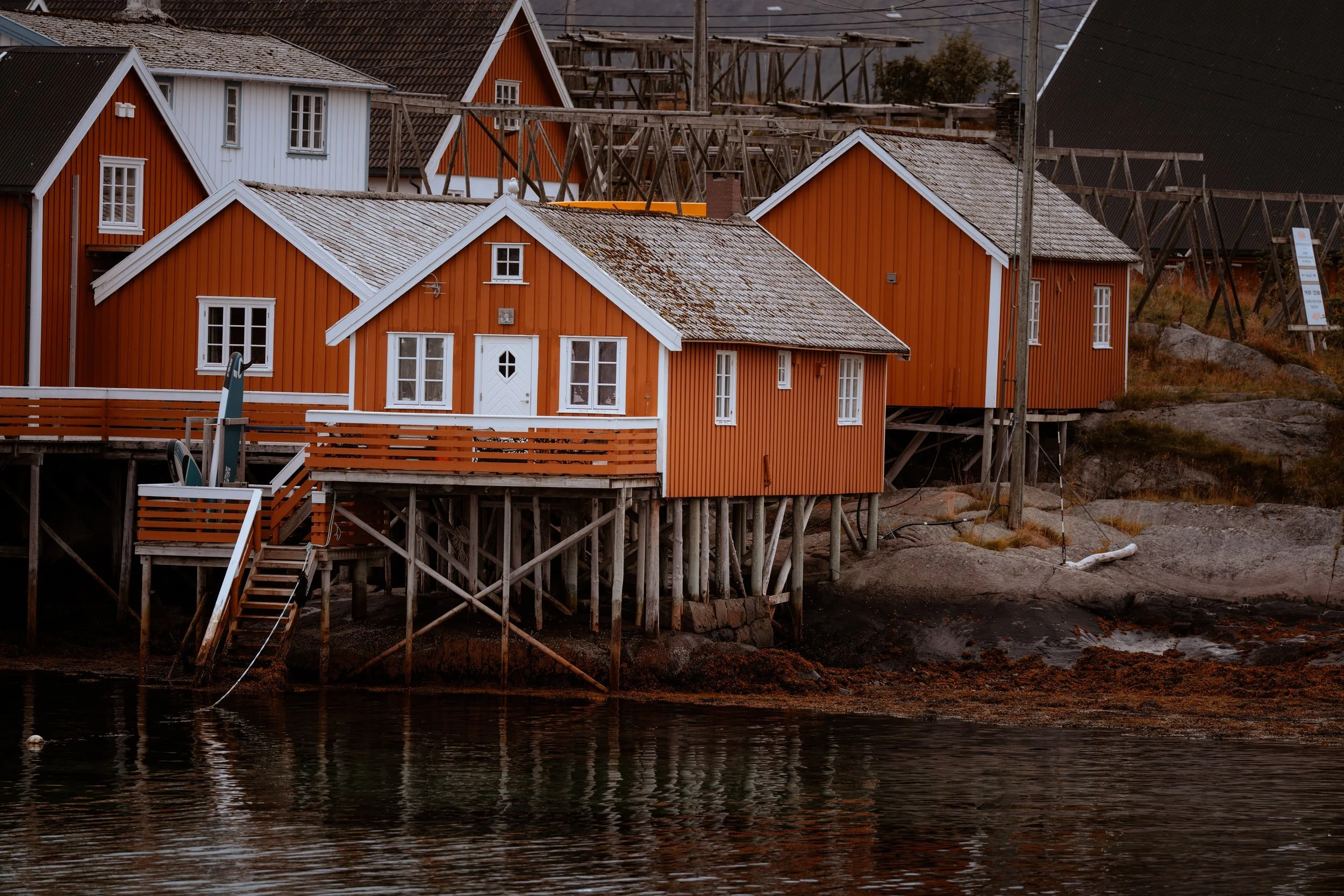
Red rorbu cabins on stilts above a calm inlet
The little things
Big landscapes are brilliant, but the small details are often what take me straight back to a place. There was an old weather station screwed to a weathered red wall, and a wooden crate stacked with drying fish heads under a hand-painted "Monkfish heads for sale" sign. Quiet frames like these give a set of images some breathing space between the big views.
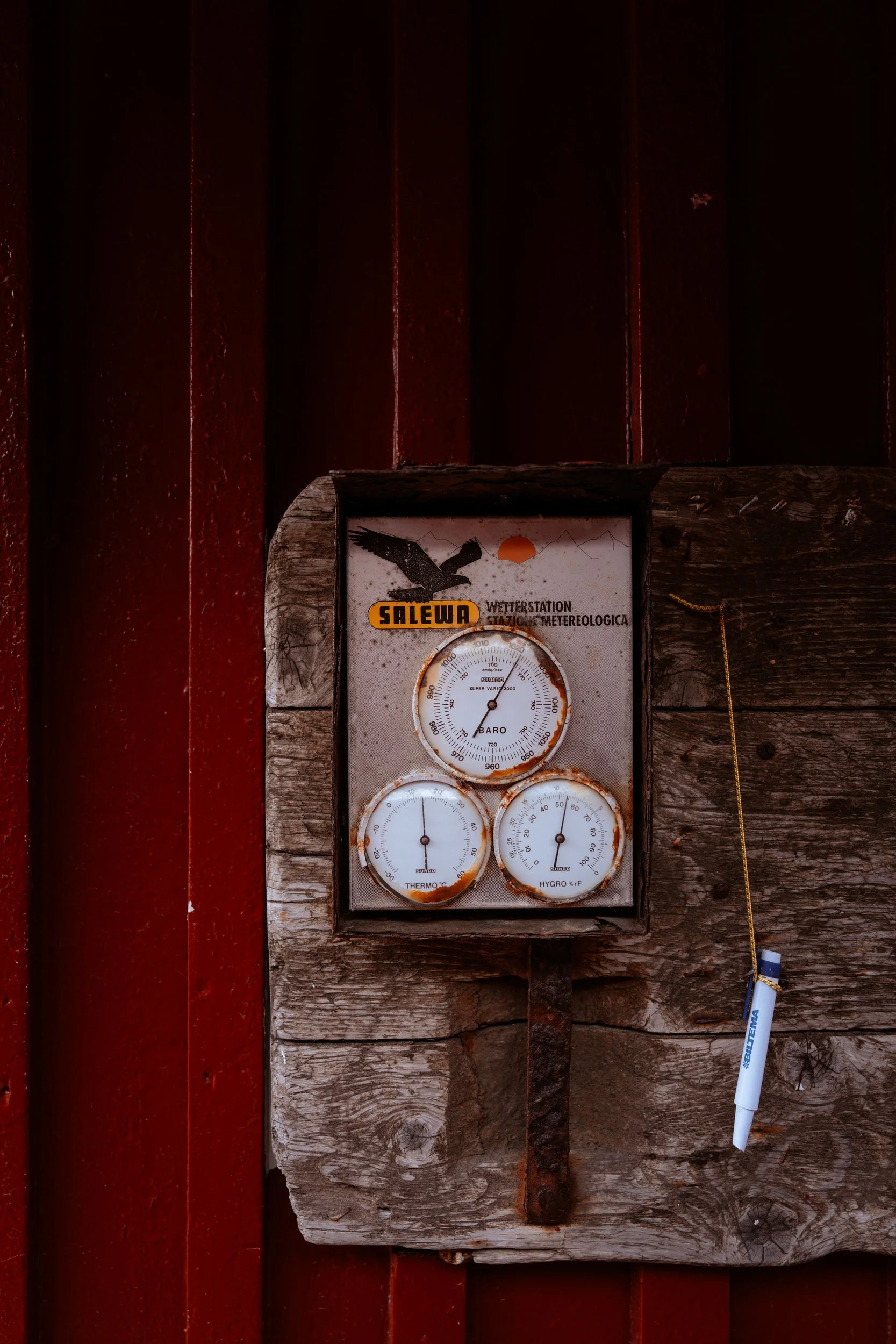
Old weather station on a red cabin wall
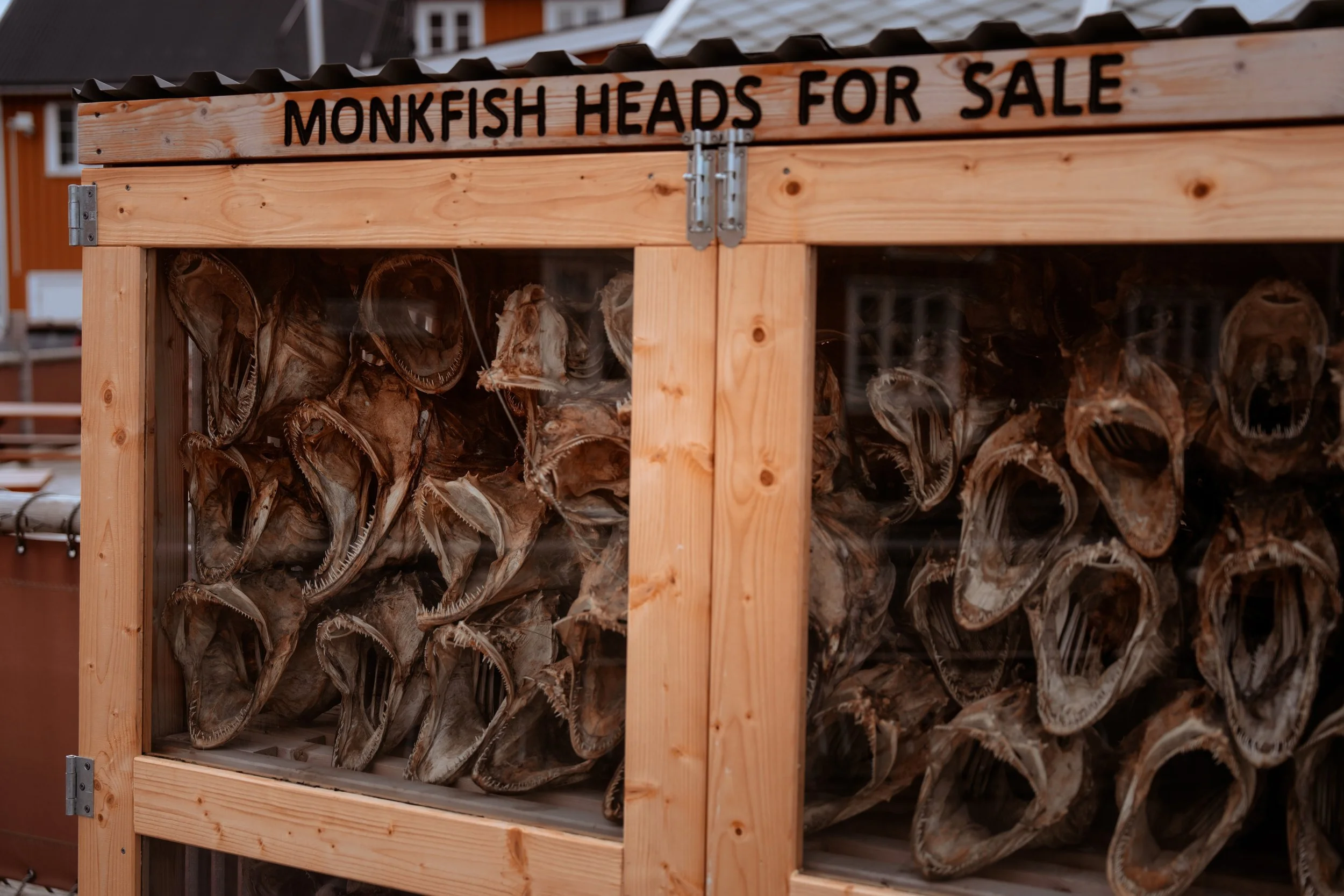
“Monkfish heads for sale”
Detail tip: when the light's flat and the mountains are hiding in cloud, go small. Textures, signs, colour and repeating shapes all look great in soft, even light.
The long way home
We wrapped up the honeymoon by starting the long journey home from Værøy. There was nothing fancy about any of it. It was just the open road, a few ferry crossings and a ton of memories. Raw, real and full of adventure, which is everything a honeymoon should be.
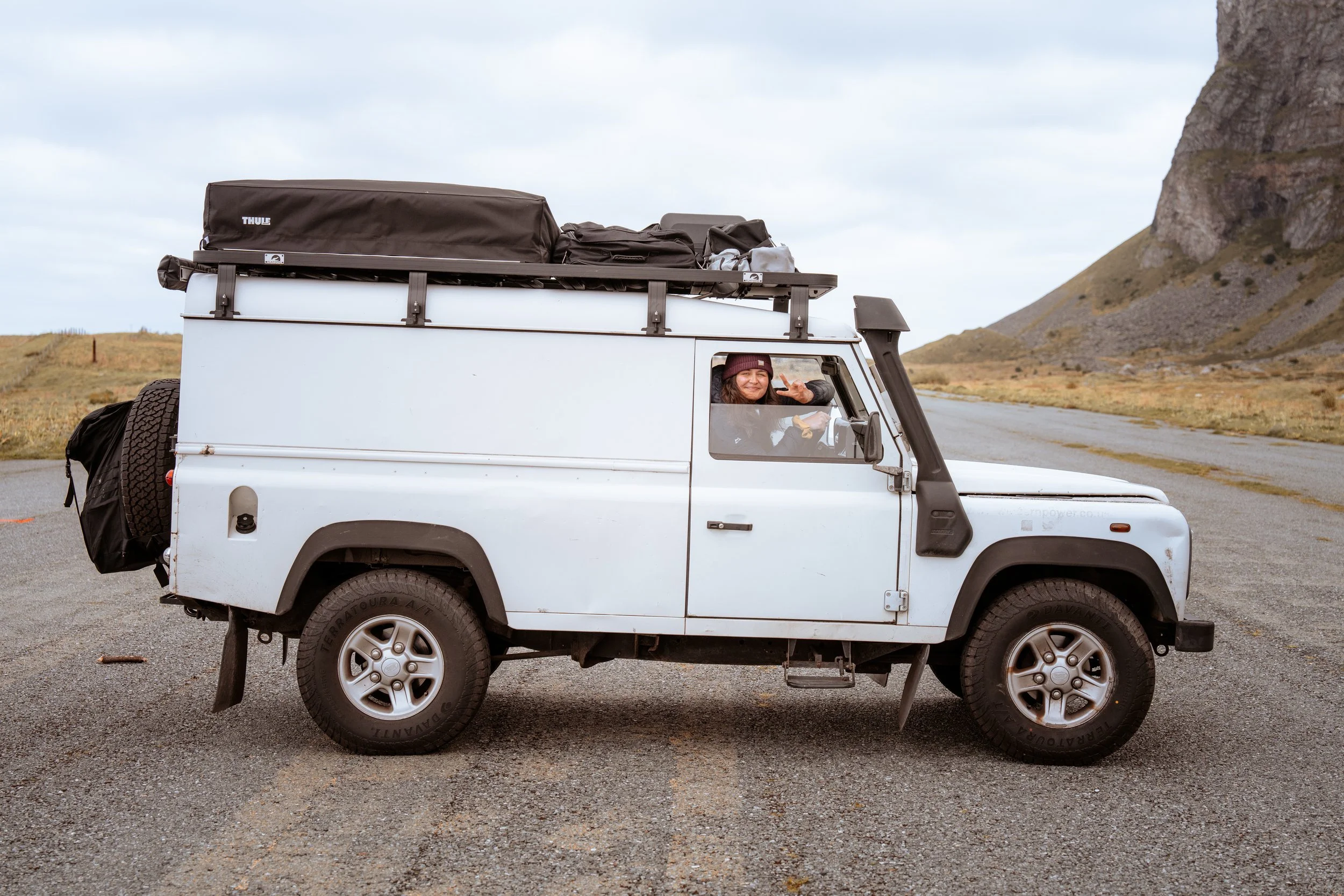
Nevis, ready for the road home
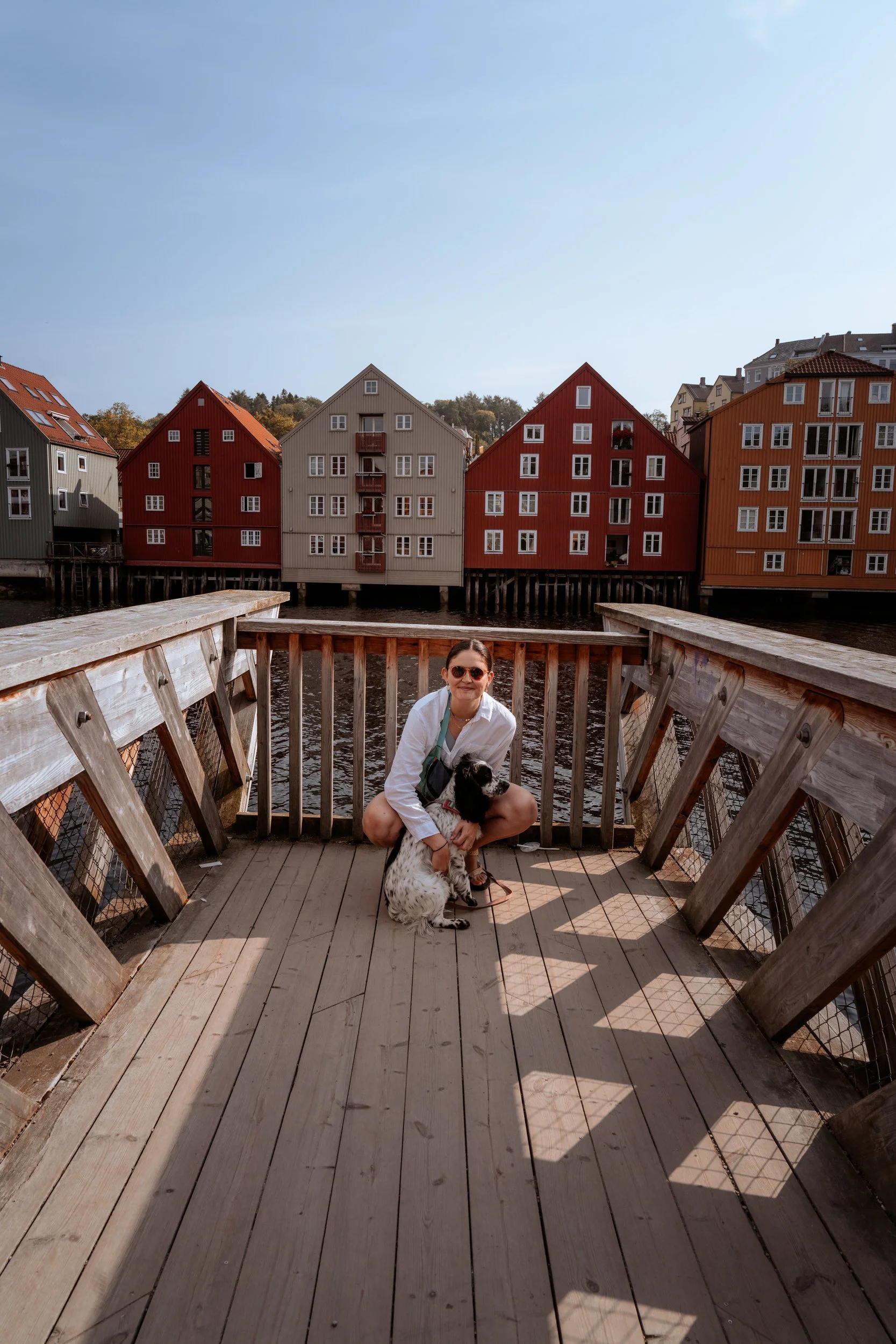
A last moment with the dogs on the boardwalk before heading south
Next chapter: winter
We're already prepping Nevis to head back north, and this time it's winter. Think snow-covered roads, icy mornings, more northern lights and Christmas in a proper winter wonderland. Sioned's verdict on Lofoten was "the BEST trip and I can't wait to go back again", so it looks like we're going. It's never dull with my crew.
If you're an outdoor or adventure brand, or you've got a shoot in mind somewhere wild, I'd love to hear from you. Drop me a line through the Contact page.
Why I Moved from Sony to Canon (and Why Sony Is Still Brilliant)
Why I switched from Sony to the Canon R5 and RF L lenses: handling, files, the kit I use now, and what I still miss about Sony.
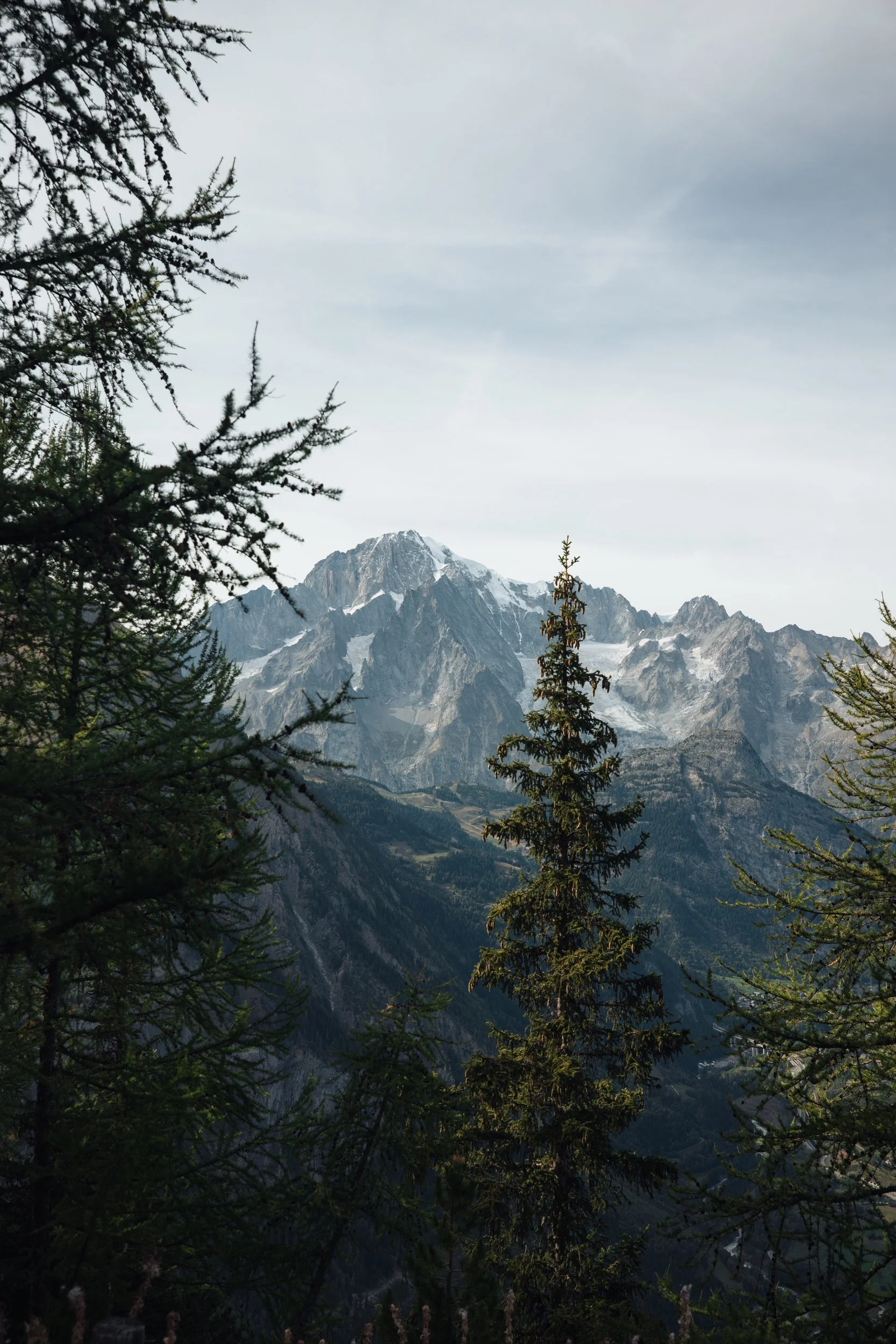
If you've followed my work for a while, you might have noticed a change in the kit bag. After a lot of time shooting Sony, I've moved over to Canon. This definitely isn't a "Sony is bad" post. Here's the honest version of why I switched, what I love, and what I still miss.
Where I'm coming from
I spent a lot of time with Sony. I shot on the a7 III, the a7R IV and the a7R V, mostly paired with Sony's G and G Master lenses. They're seriously good cameras and lenses, and I knew that system well.
Why I switched
The short answer is that I simply enjoy the experience more with Canon. I'm now shooting on a Canon R5 with some better RF lenses, and when I pick it up, it just feels right. Photography is a growing part of my working life alongside coaching canoe slalom, and when you're out in all weathers or working a long wedding day, enjoying the tool in your hands really matters.
It's not one headline feature. It's small things adding up: how the camera feels and how my files look once edited.
Handling: big hands, happy hands
This is the most practical reason. I've got big hands, and Canon bodies are nicer for me to hold. The R5 has a deep, chunky grip, and reviewers regularly point out how well it suits larger hands. Imaging Resource described it as having a nice deep handgrip with softer, rounder edges than Sony's more angular bodies, and Photo Review said the grip moulding "will suit users with large hands". That's exactly how it feels to me.
On a long day, whether that's walking in to a remote spot or following a couple from the morning prep to the first dance, a camera that sits comfortably in your hand makes a real difference.
Files and colour
I want to be fair here. I love the images from both systems. Modern cameras are all brilliant, and with a good edit you can get a lovely result from any of them.
That said, I prefer Canon, and specifically the look of the Canon files once they're edited. They just land closer to how I want my images to look, for outdoor scenes and for people. Colour is subjective, so this is very much my taste rather than a scientific verdict.
I think photographer James Reader and I see Canon in a similar way. In his video Why I Shoot Canon (After Trying Every Camera System), he's careful to say colour is personal and the brands are close, but he likes the starting point Canon files give him. That's pretty much where I've landed too.
Lenses
On the lens side, I've built my kit around three of Canon's L-series lenses, their top-tier line. Between them they cover the focal ranges I need:
RF 15-35mm f/2.8L – my wide option. It's for big landscapes, dramatic outdoor scenes and wide shots of a wedding venue or a busy dance floor.
RF 50mm f/1.2L – the one for people and atmosphere. Portraits, couple shots and quiet details look lovely with that shallow depth of field, and it copes well when the light drops in the evening.
RF 70-200mm f/2.8L – my reach lens. It's great for sport action and for catching candid wedding moments without getting in anyone's way.
Together they're my L-series trinity. For now, they give me a great setup for lifestyle, portraits and close-up sport action, and the 15-35mm is wide enough to show off the narrowboat I call home. At some point I'd like longer zooms to make sport and wildlife more reachable, but that's for another day.
What I miss about Sony
Honesty time. Sony is a fantastic system, and it does some things better. The big one is lens choice: Sony's E-mount has a huge range of third-party lenses from brands like Sigma and Tamron, which gives you a lot of options at lots of price points. Canon's full-frame RF mount is far more limited in that department, so you tend to buy Canon's own glass, which isn't cheap. And the G Master glass I used was excellent.
I also miss a couple of things on the bodies themselves. Sony's electronic viewfinder is excellent, and I got used to their articulating screen. That said, when it comes to the rear screen itself, the Canon one just looks way better to my eye, which makes reviewing shots out in the field a real pleasure.
Who should consider switching?
If you're happy with Sony, I honestly wouldn't rush to switch. The cameras are excellent and switching systems is expensive. But if you:
have bigger hands and never quite felt comfortable holding your camera,
find yourself not enjoying the shooting experience as much as you'd like, or
keep editing your files towards a look that Canon gets you closer to,
then it's worth getting a Canon in your hands. Hire one or borrow one for a weekend before you sell anything. It's all personal preference in the end, and the best camera is the one that makes you want to go out and shoot.
Shot on Canon from here on
All of my outdoor, adventure and wedding work is now shot on Canon. Longer zooms can wait. For now, these three have me covered.
If you're planning an adventure shoot or a wedding and fancy a chat, have a look at my Contact page and drop me a message. I'd love to hear what you've got in mind.
Finding the Rhythm: Coaching vs Photography
I spent a recent day wandering around Margate. Beach walks, good food, a few drinks, a bit of shopping. Nothing rushed. Just enjoying the place and the people.
I also got the camera back out for the first time in a while. It's easy to forget how much you miss capturing the little moments until you're behind the lens again, like really behind it, not just pointing and shooting, but actually looking. Watching light change. Waiting for a moment to arrive instead of chasing it.
It got me thinking about how similar that feeling is to something I believe about constantly in coaching: The Water Doesn't Care Who You Are…
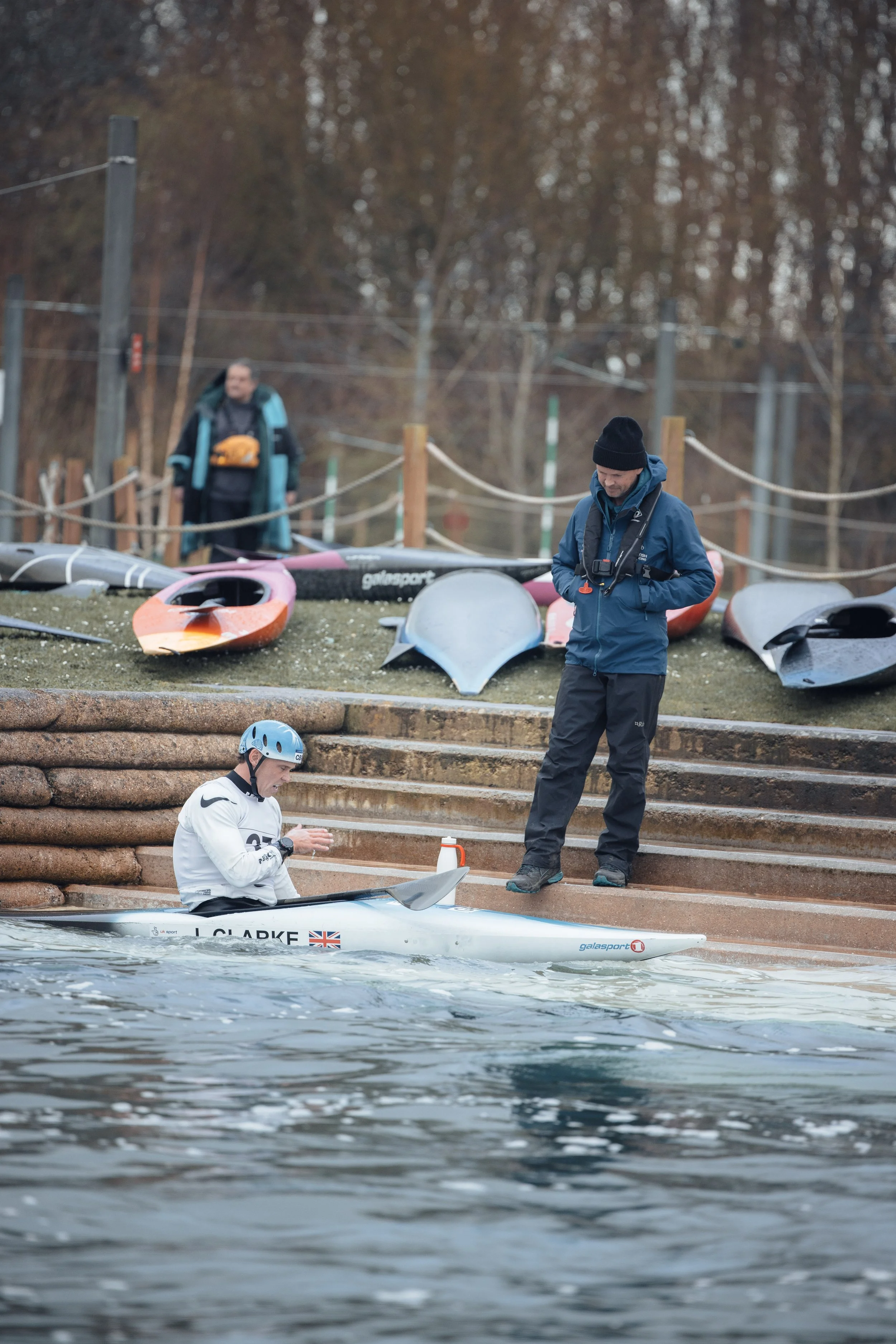
Canoe slalom has shaped how I move through the world first as an athlete, now as a coach. It's a sport that humbles you. The water doesn't care about your reputation, your best time or how well the last race went. It demands presence. Precision. Trust in your instincts, right now, in that moment. You work from a plan but your interpretation and adaptability define the outcome.
That's the thing about “flow state” , you can't force your way into it. You can only build the conditions that make it more likely to arrive. As an athlete, that meant learning to stop narrating my own performance and just read the water in front of me. As a coach, it means something different but related: watching each athlete find that same quiet confidence and helping them get there faster, more often, more reliably.
Every Athlete Reads the Water Differently
What excites me most these days is watching someone find their calm in the chaos. Their flow. Every athlete reads the water differently. Some feel it through their hips before their eyes catch up. Some see the line three gates ahead and trust their body to close the gap. Move correctly and efficiently. None of them read it the same way and the job isn't to make them read it like I did or others do, it's to help them translate their own instinct into something they can understand, refine and repeat.
That's really the core of the technical work, if I'm honest. Long before an athlete steps into a boat, they've usually already built a picture of who they are on the water. Be that fast, technical, smooth, aggressive, patient, whatever it is. That picture is their identity out there. My job is to help them see the river and the gates through that same lens, rather than a generic one. A gate isn't just a gate. To one athlete it's a chance to prove precision. To another it's a moment to attack. The technical insight I bring isn't about replacing that view, it's about sharpening it. Showing them, frame by frame if I have to, exactly where their identity and the water's demands either align or pull apart, and building the training that closes that gap.
That's also where testing earns its keep. A race simulation isn't just a test or time at the end of a session . It's a way of asking: does this athlete's technique still express who they are when fatigue shows up? Because that's when identity gets tested for real. Anyone can look fast and smooth on a open line. The athletes who hold onto that picture of themselves 25 gates deep into a testing run are the ones we're really building toward.
Coaching has deepened my love for this sport in a way competing never quite did. You learn to listen more. Feel more. Connect more with the person in front of you and with the river underneath them. There's a real privilege in being trusted with that translation work.
The Same Instinct, Two Different Tools
Walking around Margate with a camera again, I noticed the same muscle working. Photography and flow both live in the same place: presence over narration. The moment you start thinking about the shot instead of seeing it, you've already missed it. The moment an athlete starts thinking about the result instead of the water, they've left the flow that would have gotten them there.
Maybe that's why the two sides of what I do have never felt separate to me. Whether I'm on a riverbank with a stopwatch or a wedding with a camera, I'm doing the same thing: trying to be present enough to catch what's actually happening, rather than what I expected to happen.
Nothing rushed. Just paying attention.
AJ